Most companies send the same email to everyone on their list. Someone who just downloaded a PDF yesterday gets the exact same message as someone who has already asked for a demo. That is a bit like a shopkeeper giving the same sales pitch to a person who just walked in to escape the rain and a person standing at the counter with their wallet out. Both are visitors. They need to be spoken to very differently.
This is where lead temperature comes in. A way to sort people based on how ready they are to buy from you and then write emails that actually match where they are.
What "cold," "warm," and "hot" actually mean
These words sound like marketing jargon. The idea behind them is quite ordinary once you break it down.
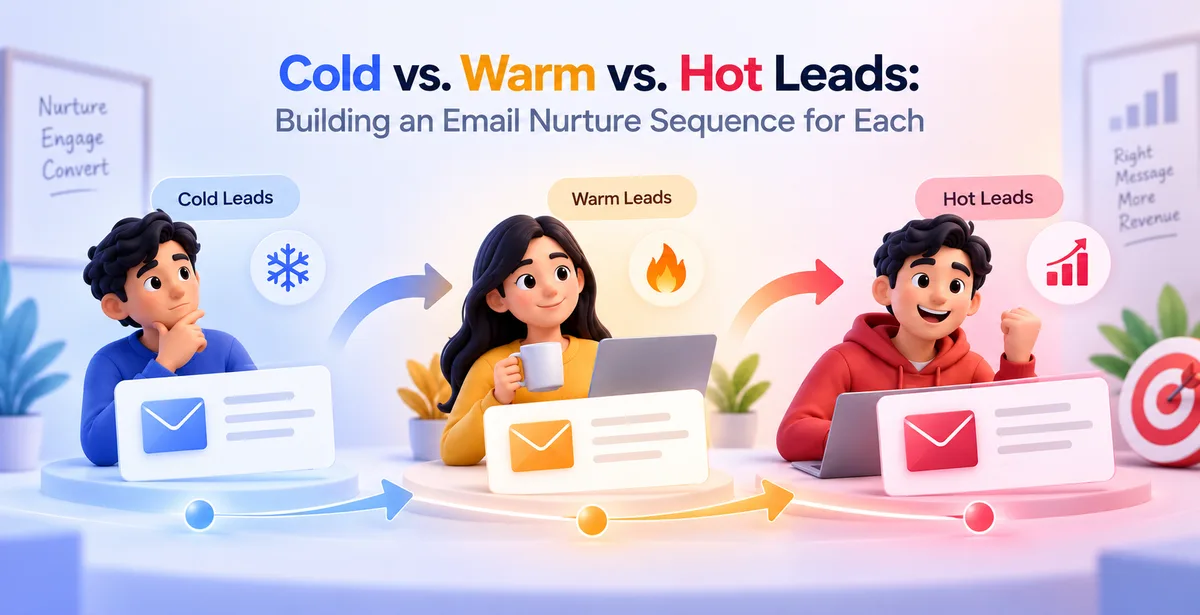
A cold lead is someone who has barely interacted with you. Maybe they signed up for your newsletter after reading a blog post. They gave you their email in exchange for a free checklist. They do not know your product well. Honestly they might not even remember signing up.
A warm lead has done a bit more. They have opened a few of your emails, clicked a link and maybe visited your pricing page once or twice. They know who you are and have some interest. They have not decided anything yet.
A hot lead is close to buying. They might have asked a question, requested a demo, added something to cart or replied to one of your emails directly. They are not just curious anymore. They are evaluating.
Take Meera, who runs a graphic design studio in Pune. She downloads an invoicing template from a software company’s website. That makes her a cold lead. A week later she opens three of their emails and clicks through to read a comparison page between their plans. Now she is warm. Ten days after that she emails their support team asking whether the tool works with GST invoices. She is hot. Same person, three different stages and each one needs a different kind of email.
Why one email isn't a nurture sequence
A nurture sequence is simply a set of emails sent over time in order, designed to move someone closer to a decision. The word nurture is used because you are not trying to close a sale in the message. You are building familiarity first, the same way you would build trust with a new neighbor before asking them for a favor.
It's unlikely that a "Buy Now" email will get you anywhere if the person signed up to your list two days ago. In the best case, they will ignore the email, while in the worst case, they will unsubscribe. On the other hand, shooting five educational emails to someone who has already asked for demo is disrespectful, since they prefer to cut the chase and discuss real business instead of reading your blog newsletter. This is why the sequence has to change based on temperature.
Building the sequence for cold leads
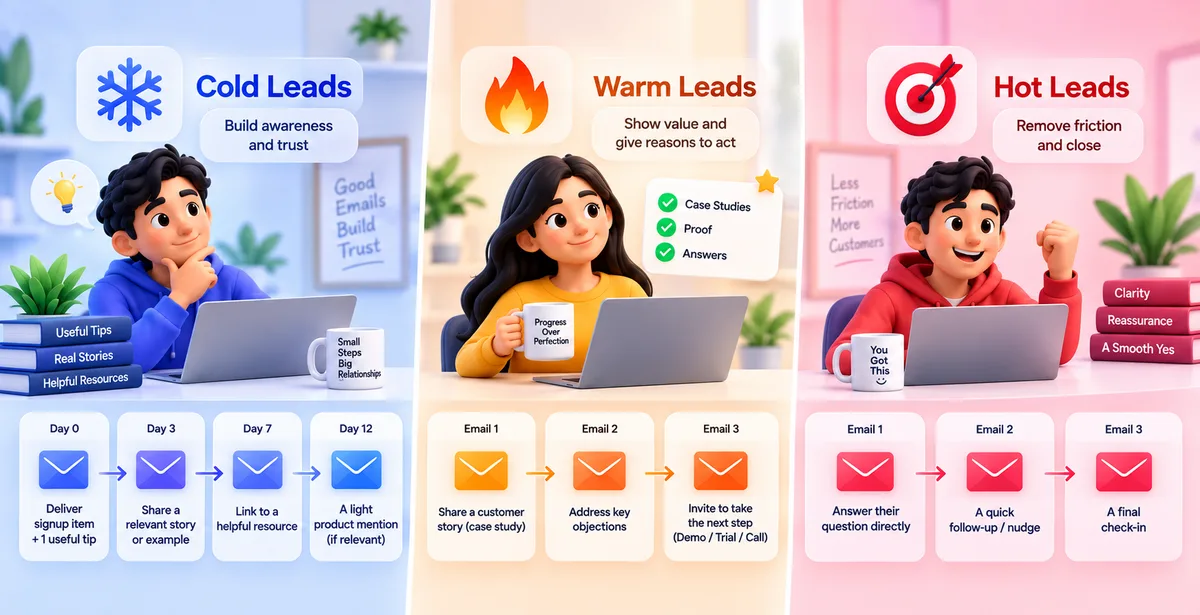
Cold leads need patience. The goal here is not a sale. It is making sure they remember who you are and start to see you as useful, not salesy.
A cold sequence usually spreads emails a few days apart and leads with value before asking for anything. For example:
- Email 1 (Day 0): Deliver whatever they signed up for, one small genuinely useful tip related to it. No pitch.
- Email 2 (Day 3): Share a story or example of a real problem people in their situation face and how it is usually solved.
- Email 3 (Day 7): Point them to a helpful resource. A guide, a short video or a comparison. Still no hard sell.
- Email 4 (Day 12): A light low-pressure mention of your product framed as "if this is something you are dealing with here's how we help."
The tone should read like a person explaining something to a friend, not a brand announcing a launch. Subject lines that sound curious or helpful ("Why most invoices get paid late") tend to do better here than ones that sound promotional ("50% Off This Week Only").
Building the sequence for warm leads
Warm leads already believe you might be useful. They just need proof and a reason to act sooner rather than later.
At this stage spacing can tighten a little every two to four days and the content should shift from general education to specific proof: case studies, comparisons, short testimonials or a walkthrough of exactly how your product solves the thing they seemed interested in.
A rough shape looks like this:
- Email 1: A story about a customer with a similar problem and how it got resolved.
- Email 2: Answer the objection most people have at this stage. Price, setup time, whether it works for their use case.
- Email 3: A direct but polite invite. A demo, a free trial or a call. With a clear next step.
This is also where personalisation matters more. Personalisation just means using details you already know about the person. Their name, what page they visited, what they downloaded. To make the email feel written for them not blasted to a list. A line like "Since you looked at our pricing page for the Plus plan" feels very different from a "Hi there."
Building the sequence for hot leads
Hot leads do not need convincing anymore. They need clarity, reassurance and a smooth path to say yes. Long story-driven emails will actually slow them here.
Keep these short and direct:
- Email 2(if no reply in 2–3 days):Email 1: Acknowledge their interest directly ("Following up on your question about GST invoicing") and answer it fully.
- Email 2(if no reply in 2–3 days): A nudge. Perhaps addressing a common last-minute doubt or offering a call.
- Email 3 (if still no response): A simple respectful check-in. Something like "Should I close this out or would a quick call help?" often gets a reply because it removes pressure of adding it.
Notice the gap between emails is much shorter for leads. A day or two, not a week. Because interest fades fast once someone stops thinking about you.
The part most people skip: making sure the email actually lands
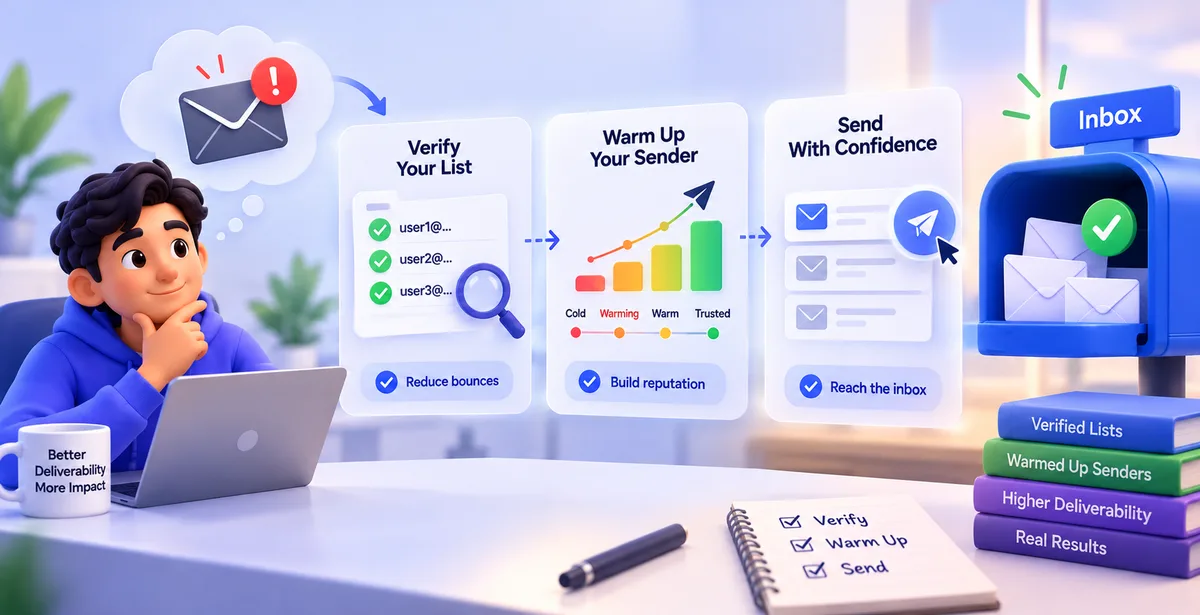
Here is something that catches a lot of businesses off guard. You can write the perfect three-stage sequence and it still won't work if your emails are landing in spam or bouncing before they reach anyone.
A few things affect this more than people realise:
Bounce rate is the percentage of emails that fail to deliver usually because the address is fake, mistyped or no longer active. A high bounce rate does not just waste your effort. It damages your sender reputation, which's basically how trustworthy mailbox providers like Gmail or Outlook think your sending address is. A bad reputation means even your genuine written emails start going to spam. This is why checking a list before sending. Verifying that each address is real and active. Matters much as the writing itself. Pingovo's verification tool does this by checking syntax, DNS and MX records and running a SMTP-level check so addresses that would have bounced get flagged before they ever enter your sequence.
Then there is warm-up, which applies to new sending addresses. A brand-new email account has no history with mailbox providers. If it suddenly sends hundreds of emails it often gets treated as suspicious and lands in spam. Regardless of how good the content is. Warming up means gradually increasing how much you send over a week so the address builds a track record. Pingovo's warmup feature does this tracking a health score that moves from cold to warming to warm to fully trusted which is a fairly close parallel to how we have been talking about leads themselves.
Once a list is verified and a sending address is properly warmed up the actual sequence. Cold, warm or hot. Can be. Scheduled without worrying that the emails simply won't arrive.
How do you know when a lead has moved from one stage to the next?
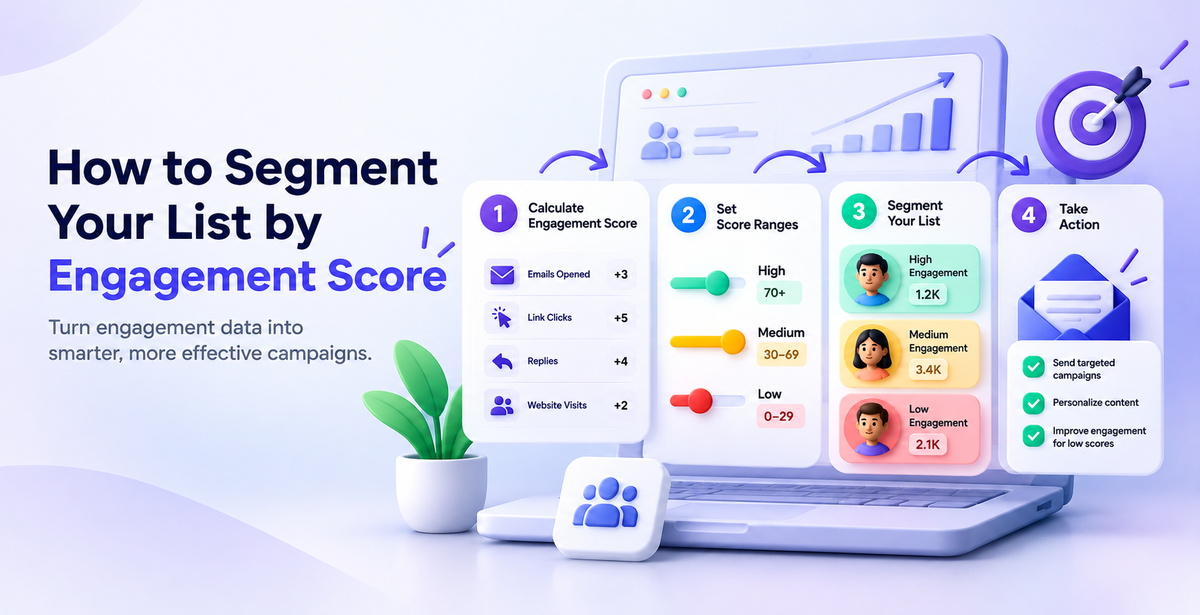
This is usually the part to get right and it is rarely one single action. Watch for patterns of single events: someone who opens every email but never clicks is still warm at best while someone who opens once and immediately visits your pricing page twice might already be closer to hot than their download history suggests.
Practical signals worth tracking:. Click behaviour over multiple emails (not just one) whether they have visited high-intent pages like pricing or demo requests and whether they have replied or asked a question. A tool that shows opens and clicks per contact, rather than just an overall campaign number makes this much easier. You can actually see which specific person clicked through three times this week and move them into a different sequence instead of guessing.
Putting it together
None of this has to be hard to begin with. A cold sequence that gives something before asking for anything, a warm sequence that shows proof and answers questions and a hot sequence that is brief and simple to take action on. That is the full plan. What makes a sequence that actually works different from one that gets forgotten is usually two things: writing that feels like it is meant for that step and making sure the emails actually get into the inbox in the first place.
If you are doing this for the time, start smaller than you think you need to. Three emails for each step is enough to start with. You can always add more once you see how people really react. And with good list checking and a verified sending address behind it you will actually be able to trust those reactions as signs, not fake signals, from emails that were never sent.