You hit send on a campaign you spent hours writing. Then you watch the open rate crawl up to 12% and stall there. Sound familiar?
Most people assume the problem is the email itself. Sometimes it is. But more often, the real issue happens before anyone reads a word of your content — the moment your subject line shows up in an inbox and someone decides, in about two seconds, whether you're worth their attention.
If you're wondering how to increase email open rates, the short answer is this: fix your sender reputation, write subject lines that don't sound like everyone else's, and only send to people who actually want to hear from you. The longer answer is below.
Why Email Open Rates Actually Matter
An open rate tells you whether your email got noticed at all. It's the first checkpoint in your campaign — before clicks, before conversions, before anyone considers what you're offering.
Here's what people miss: open rate isn't just a vanity number. Inbox providers like Gmail and Outlook watch how people interact with your emails. If subscribers consistently ignore or delete your messages, that signals your emails might not be wanted, which can push future emails straight into spam — even for people who'd genuinely want to read them.
A low open rate isn't just a missed opportunity today. It can quietly damage your ability to reach anyone tomorrow.
What Counts as a Good Email Open Rate?
This varies by industry, list size, and how engaged your subscribers are. Generally, open rates in the 15% to 25% range are considered solid, though niche or highly engaged lists can go well above that.
Be cautious about chasing a number from someone else's case study. A 40% open rate on a list of 500 loyal subscribers means something different than 40% on a list of 50,000. What matters more is whether your rate is trending upward compared to your own past campaigns.
What Actually Affects Whether People Open Your Emails
- Sender reputation carries more influence than most marketers realize. A history of spam complaints or low engagement can land you in spam before anyone gets the chance to open your email.
- Subject line and preview text work together to earn the click. One without the other is half a pitch.
- Send timing matters, but less than people think — it's a tiebreaker, not a silver bullet.
- List quality, whether subscribers actually want your emails, probably matters more than any single tactic here.
- Sender name recognition plays a bigger role than most people credit.
How Subject Lines Influence Opens
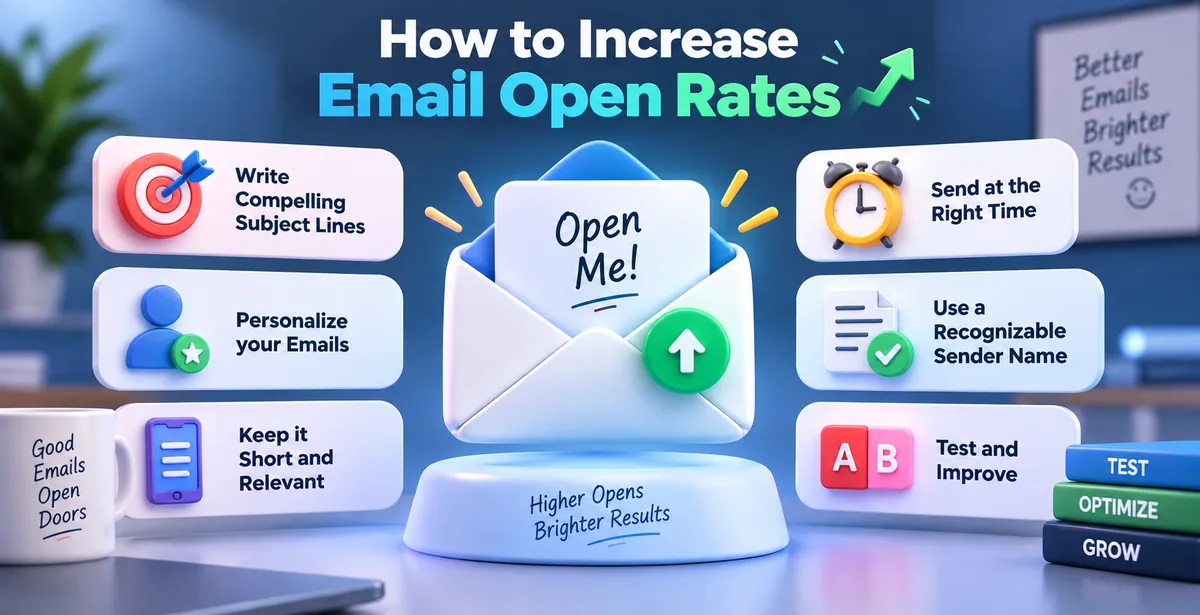
Your subject line has one job: convincing someone to open the email. It doesn't need to summarize the content or be clever for its own sake.
What actually works, based on what I've seen across different campaigns, is specificity. "5 Tips for Better Sleep" gets ignored. "Why You're Tired at 3pm Even After 8 Hours of Sleep" gets opened, because it names a problem the reader recognizes in themselves.
A few things worth trying: ask a direct question your reader has probably asked themselves, reference something timely without forcing it, keep it under 50 characters so it doesn't get cut off on mobile, and avoid words that commonly trigger spam filters, like "free" or "guaranteed."
One mistake I see constantly: subject lines that try too hard to sound exciting, like "You Won't BELIEVE This Offer!!!" That reads as spammy before it's even opened. Plain, honest curiosity tends to outperform hype over time.
The Importance of Preview Text
Preview text is the snippet next to your subject line in the inbox, usually pulled automatically from your email's first line unless you set it manually. It's one of the most underused tools in email marketing — a lot of people leave it blank or let it default to "View this email in your browser," wasting space that could do persuasive work. Think of it as a second subject line: it should complete the thought your subject line started, not repeat it.
Choosing the Right Sender Name
This gets overlooked constantly, but it shouldn't. People scan their inbox based on who sent something almost as much as what the subject line says.
Using a real person's name, like "Sarah from [Company]," tends to perform better than a generic company name, because it feels more human. That said, consistency matters more than the specific format. Switching between "Company Newsletter," "John Smith," and "Team@Company" makes it harder for subscribers to build recognition — and recognition drives quick opens.
Sending Emails at the Right Time
There's no universal best time to send email. I've seen campaigns perform well at 6am and others at 8pm, depending entirely on the audience's habits. What actually helps is testing your own list rather than copying advice about someone else's audience. B2B audiences often respond better to mid-morning weekday sends; consumer audiences sometimes respond better in the evening.
Rather than chasing the "perfect" time, focus on consistency. Sending at roughly the same time each week helps subscribers build a habit of expecting your email, which itself improves open rates.
Audience Segmentation and Personalization
Segmentation means splitting your list into smaller groups based on shared characteristics — purchase history, engagement level, interests — so each group gets content that's actually relevant to them. A message relevant to everyone is usually interesting to no one.
Personalization goes further. It's not just using someone's first name in the subject line — real personalization means referencing actual behavior, like what they browsed or clicked previously. It takes more setup, but it consistently outperforms generic blasts.
Email List Hygiene: The Unglamorous Factor That Matters Most
List hygiene means regularly removing inactive, invalid, or unengaged subscribers. It sounds counterintuitive to want a smaller list, but it's one of the most effective things you can do for open rates.
Inbox providers track engagement per sender. If a large chunk of your list never opens your emails, your overall engagement looks weak, hurting deliverability for everyone — including subscribers who do want to hear from you.
A simple habit: every few months, look at subscribers who haven't opened anything in 90 to 180 days and send a re-engagement email asking if they still want to hear from you. If they don't respond, it's usually better to remove them than keep mailing an audience quietly hurting your sender reputation.
Mobile-Friendly Emails
More than half of email opens happen on mobile in most industries. If your email isn't optimized for a small screen, you're losing people before they reach your content — and it affects open rates indirectly, too. If subscribers repeatedly see a broken layout on their phone, they'll start opening less, or stop entirely. Keep subject lines short enough to display fully on mobile, and make sure your design doesn't require pinching and zooming.
A/B Testing: How to Actually Improve Over Time
A/B testing means sending two versions of an email, usually with one variable changed, to a portion of your list to see which performs better. For open rates, test one thing at a time — subject line, sender name, or send time — since testing multiple variables at once makes it impossible to know what caused the difference.
Small, consistent testing over months reveals more useful patterns than one big test, since your audience's preferences shift over time too.
Avoiding the Spam Folder
Even a great subject line can't save an email that never reaches the inbox. A few practical steps help: authenticate your domain with SPF, DKIM, and DMARC (technical settings that verify you're a legitimate sender, not someone spoofing your domain); avoid sudden spikes in sending volume, which can look suspicious to spam filters; keep your unsubscribe link visible and functional, since hiding it often causes spam complaints instead; and warm up new sending domains gradually rather than blasting your full list on day one.
Common Mistakes That Quietly Kill Open Rates
A few patterns show up again and again: sending too frequently without enough value to justify it, using the same subject line format every time until subscribers learn to ignore it, ignoring list hygiene until deliverability problems show up, buying email lists instead of growing them organically (purchased contacts haven't opted in and often mark emails as spam), and never testing anything while assuming the first version is good enough.
Frequently Asked Questions
What is a good average email open rate?
Most industries see healthy open rates between 15% and 25%, though this varies by niche, list size, and subscriber engagement.
Does subject line length affect open rates?
Yes, to a degree. Shorter subject lines, generally under 50 characters, tend to display fully on desktop and mobile, avoiding truncation that can lose the reader's interest.
How often should I clean my email list?
Every three to six months is reasonable for most senders, though highly active lists may benefit from more frequent checks.
Does emoji use in subject lines help or hurt open rates?
It depends on your audience and industry. Emojis can help subject lines stand out, but overusing them can look unprofessional depending on your niche.
Is personalization worth the extra effort?
In most cases, yes. It tends to outperform generic messaging, though the effort should match the size and value of your list.
Can a good subject line fix poor deliverability?
No. If your emails are landing in spam, no subject line will help, since the recipient never sees it. Deliverability problems need to be fixed at the technical and sender-reputationlevel first.
Improving email open rates isn't about finding one trick that transforms your numbers overnight. It's a combination of smaller decisions — a cleaner list, relevant segmentation, subject lines that respect the reader's intelligence, and consistent testing over time.
Some of these changes show results within a few campaigns. Others, like list hygiene and sender reputation, take longer but matter just as much. There's no guaranteed formula that works identically for every list or industry, so treat this as a starting point to test against your own audience, not a rulebook to follow blindly.